Transaction Safeguards Powering Mobile Live Dealer Tournament Success Through Layered Reward Systems
Drew Müller · Aug 26, 2026
Transaction Safeguards Powering Mobile Live Dealer Tournament Success Through Layered Reward Systems
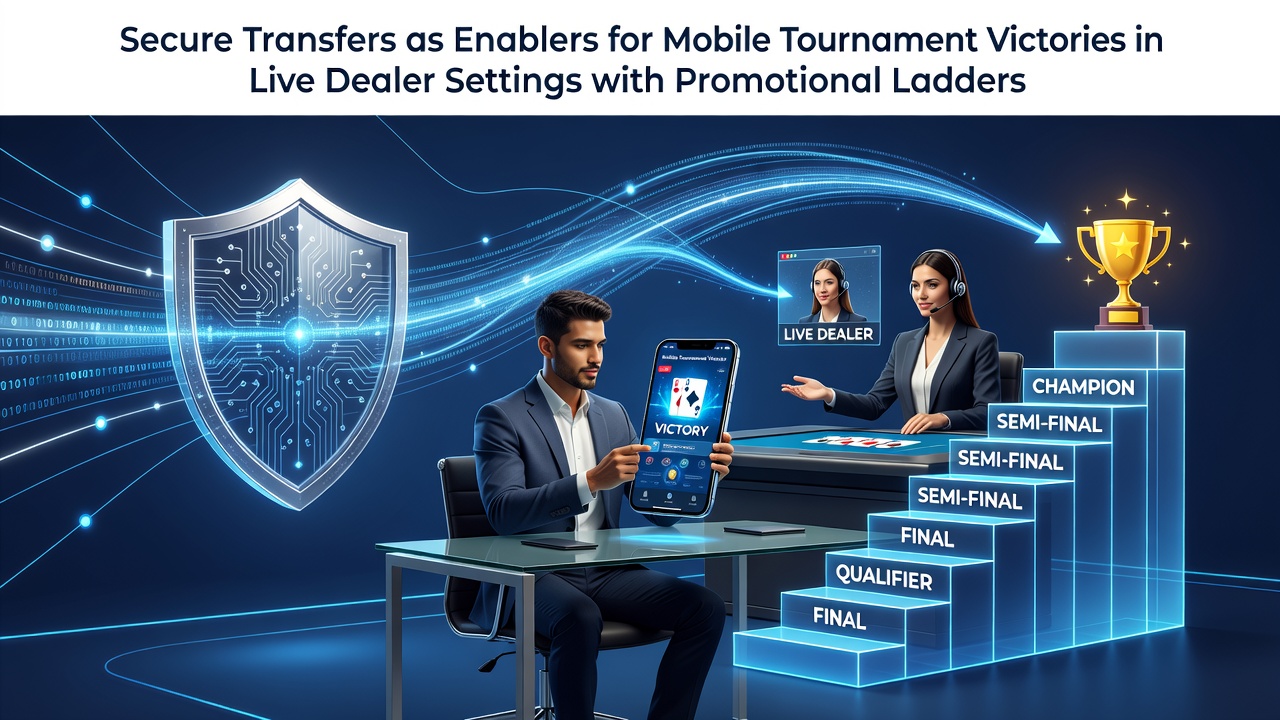
Secure transfer technologies have become central components in mobile platforms that host live dealer tournaments, where players advance through promotional ladders based on real-time performance and accumulated rewards. Data from regulatory filings indicate that encrypted payment channels reduce processing delays during high-volume tournament periods, allowing participants to maintain continuous engagement without interruptions from funding issues. In August 2026, industry reports showed increased adoption of multi-factor authentication protocols across portable gaming applications, correlating with higher completion rates for live table events that incorporate tiered incentive structures.
Payment Infrastructure and Tournament Dynamics
Live dealer environments on mobile devices rely on instantaneous transaction confirmations to support entry fees, prize distributions, and ongoing bets during competitive sessions. Observers note that platforms integrating bank-grade encryption and tokenization see fewer abandoned sessions when players move between different promotional levels. Researchers at academic institutions studying digital gaming behaviors have documented how seamless fund movements enable sustained participation in events where rankings update in real time and rewards escalate based on cumulative achievements.
Those who analyze transaction logs from multiple jurisdictions report that secure systems handle peak loads during major tournament windows without compromising speed or accuracy. This capability proves essential in settings where live dealers interact directly with players through video streams while promotional ladders track progress across dozens of rounds. Evidence from North American gaming oversight bodies shows that operators employing these safeguards maintain compliance while scaling event sizes.
Promotional Ladders and Real-Time Interactions
Promotional structures in mobile live dealer formats often feature ascending tiers that unlock additional bonuses, entry privileges, and exclusive tables as players accumulate points from wins and participation. Secure transfers facilitate the rapid crediting of these rewards, preventing gaps that could disrupt momentum in competitive sequences. Figures from the Alcohol and Gaming Commission of Ontario reveal steady growth in mobile tournament volumes where protected payment rails support both deposits and withdrawals tied to leaderboard positions.
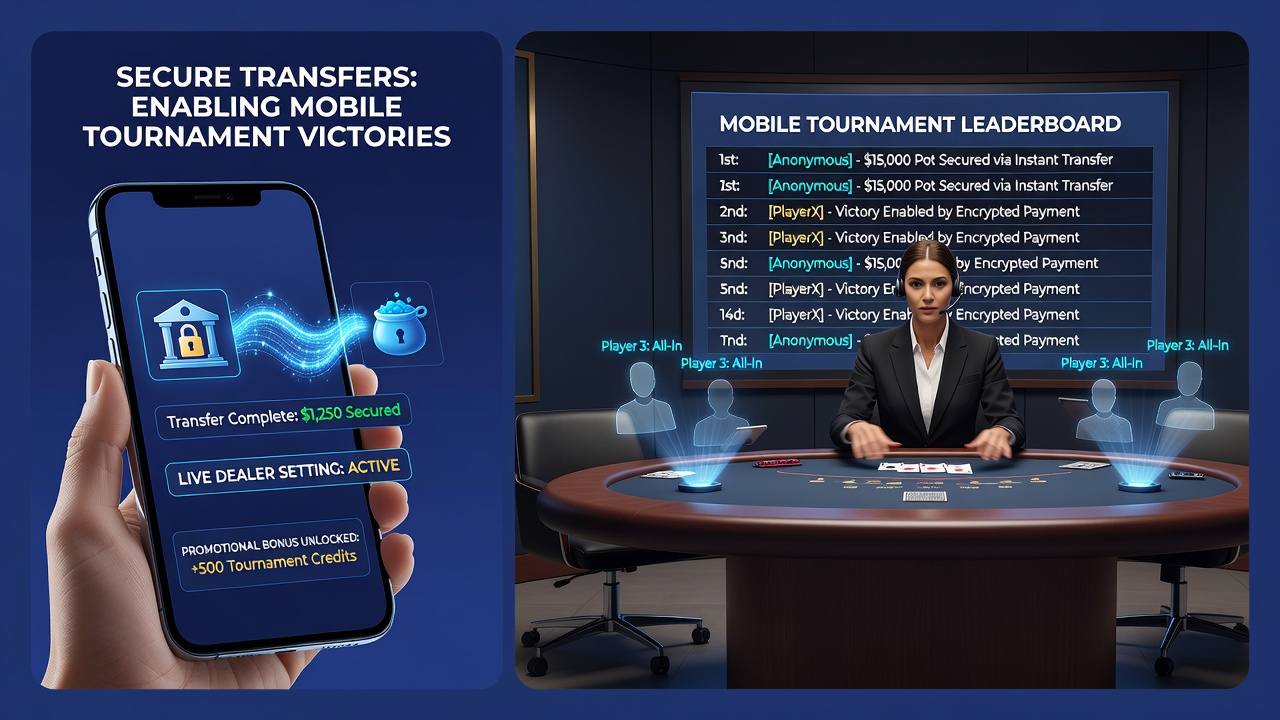
One study of portable gaming patterns indicated that participants using verified transfer methods reached higher tiers more consistently because funds moved without extended verification holds. This pattern holds across regions where regulators require documented audit trails for all financial movements within gaming ecosystems. Connections between these systems and live interactions become apparent when examining how instant confirmations allow players to re-enter subsequent rounds or claim tier benefits immediately after a session concludes.
Regulatory Context and Platform Adaptations
Government agencies across different markets have established standards for transaction security that directly influence how mobile tournament platforms operate. The Nevada Gaming Control Board has published guidelines emphasizing encryption requirements and fraud detection measures that operators must implement to host events involving real-money stakes. These standards align with broader trends where platforms adapt their payment architectures to support the fluid movement of funds during extended tournament cycles featuring live dealer formats.
Industry associations have compiled data demonstrating that platforms prioritizing secure channels experience fewer disputes related to delayed prize payouts or interrupted promotional progressions. Such findings underscore the practical links between protected transfers and the ability of players to climb reward ladders without technical friction. In regions with expanding mobile gaming regulations, these infrastructure elements have supported the rollout of larger-scale live dealer competitions that run continuously across multiple time zones.
Conclusion
Secure transfer mechanisms continue to underpin operational reliability in mobile environments that combine live dealer sessions with structured promotional advancement. Data from varied regulatory sources illustrate measurable connections between payment security features and sustained player activity across tournament formats. As platforms refine these systems, the capacity to support uninterrupted competitive play and reward progression remains a documented outcome of such technological integrations.