Tennessee Enacts Immediate Restrictions on Sweepstakes Casino Platforms Through New Legislation

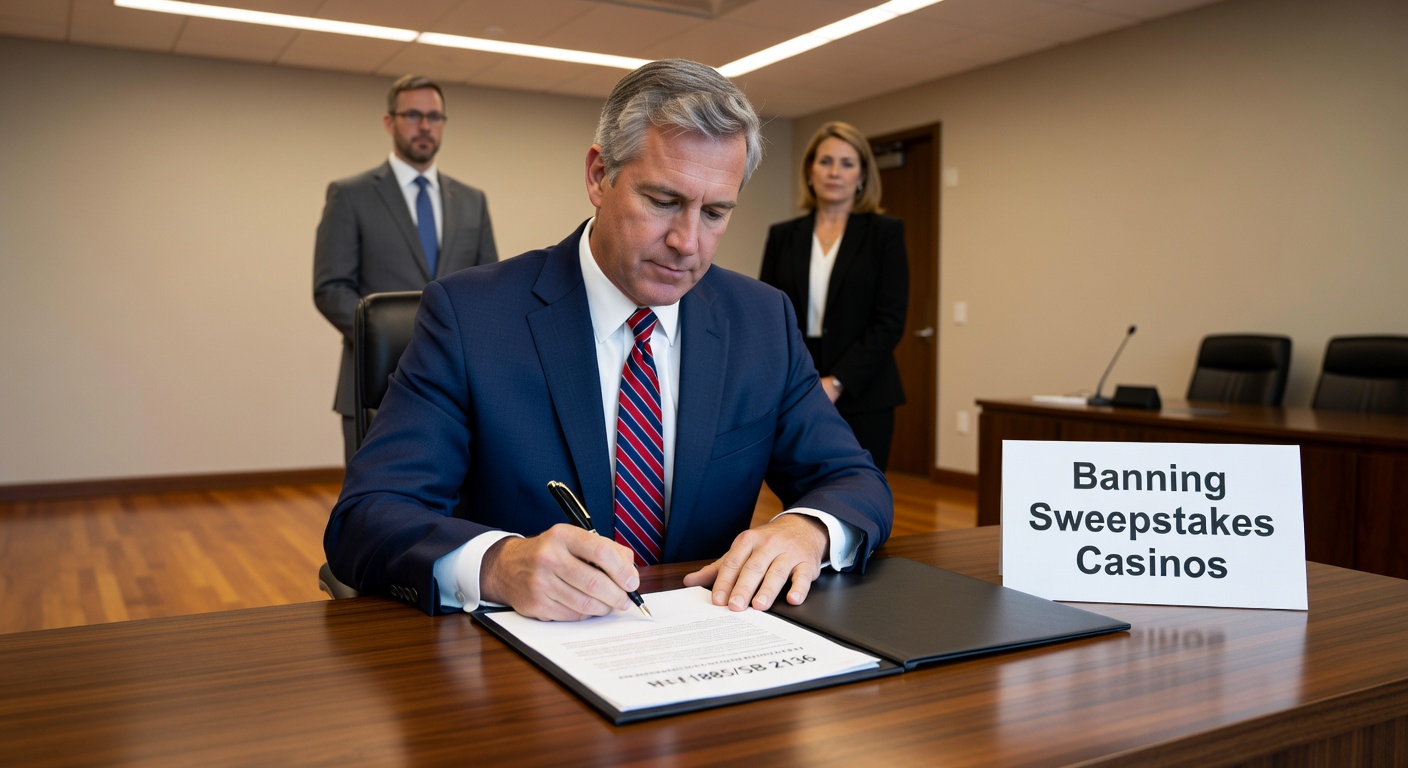
Tennessee Governor Bill Lee signed HB 1885/SB 2136 into law, which classifies sweepstakes casinos as unlawful gambling under the state's consumer protection statutes, and the measure took effect right away upon approval. Multiple operators responded by withdrawing services from Tennessee residents, while earlier actions from the Attorney General had already included cease-and-desist communications to several platforms. The legislation amends existing consumer protection frameworks to address these online offerings directly, and reports indicate that services ceased operations within days of the signing.
Details of the Legislative Changes
HB 1885/SB 2136 targets sweepstakes-based casino games by redefining them within the consumer protection laws, which creates clear prohibitions on their operation and promotion within the state. The bill passed through the legislative process before reaching the governor's desk for signature, and it avoids any delayed implementation clauses that might have allowed continued activity. Observers note that this approach mirrors prior enforcement patterns where regulators moved quickly once legal tools became available, and the immediate effective date left little room for transition periods.
Those familiar with the bill's language point out how it integrates sweepstakes mechanics into broader gambling definitions without creating new regulatory categories. Data from legislative tracking sites shows the paired house and senate versions advanced in tandem, which streamlined final approval. And because the changes sit inside consumer protection statutes rather than gaming commission rules, enforcement responsibilities fall to the Attorney General's office alongside existing oversight teams.
Operator Responses and Market Adjustments
Following the signing, several sweepstakes casino operators announced they would no longer accept users from Tennessee and began blocking access for in-state accounts. These exits occurred rapidly, with some platforms sending notifications to customers within 48 hours of the governor's action. Earlier cease-and-desist letters from the Attorney General had already prompted some companies to review their Tennessee presence, which set the stage for the full withdrawal once the bill became law.
Operators cited the new statutory classification as the primary driver behind their decisions to exit, while others paused marketing efforts targeted at Tennessee residents even before formal shutdowns. The coordinated response across multiple platforms suggests advance preparation based on the bill's progress through the legislature. Figures from industry monitoring services reveal that dozens of sites adjusted their geofencing parameters almost immediately after the announcement, which prevented new registrations and limited ongoing play sessions.
Background on Prior Regulatory Steps
Before the legislation reached the governor, the Attorney General had issued multiple cease-and-desist orders to sweepstakes operators suspected of violating existing rules. These letters outlined specific compliance concerns and requested that companies halt promotions directed at Tennessee consumers. The sequence of actions demonstrates how enforcement evolved from targeted warnings to comprehensive statutory updates that close potential loopholes.
Legislative records indicate that discussions around sweepstakes classifications began gaining momentum during earlier sessions, which ultimately produced the language in HB 1885/SB 2136. The bill's sponsors framed the measure as an extension of consumer protection priorities rather than a new regulatory expansion, and the final text reflects that focus by embedding changes within established statutes. As a result, the framework allows for quicker application of penalties and injunctive relief compared to standalone gaming legislation.
Current Status as of May 2026
By May 2026 the restrictions remain fully active, with no reported reversals or court challenges that have altered the core prohibitions. Operators that left the market have maintained their exit, and state enforcement continues through routine monitoring of online activity. The pattern shows sustained compliance across the sector, while residual effects include shifts in user behavior toward other entertainment options outside the sweepstakes category.
State records confirm that the Attorney General's office has continued its oversight role without interruption since the signing, which keeps the policy consistent. This ongoing application has produced steady implementation rather than episodic enforcement waves, and the absence of new legal filings suggests the initial adjustments have held without major disruption.
Conclusion
The signing of HB 1885/SB 2136 marked a decisive step in Tennessee's approach to sweepstakes casino operations by placing them under existing consumer protection laws with immediate effect. Operators responded with prompt exits, and prior Attorney General actions had already prepared the ground for this outcome. As of May 2026 the policy stands in place, supported by the statutory changes and continued regulatory attention. HB 1885/SB 2136 remains the central reference point for understanding these developments, while the sequence of enforcement actions illustrates how legislative and administrative tools combined to reshape the available options for Tennessee residents.