Linking Payment Processing Speeds to Advancement Rates in Tiered Mobile Gaming Challenges Involving Live Interactions and Progressive Prize Structures
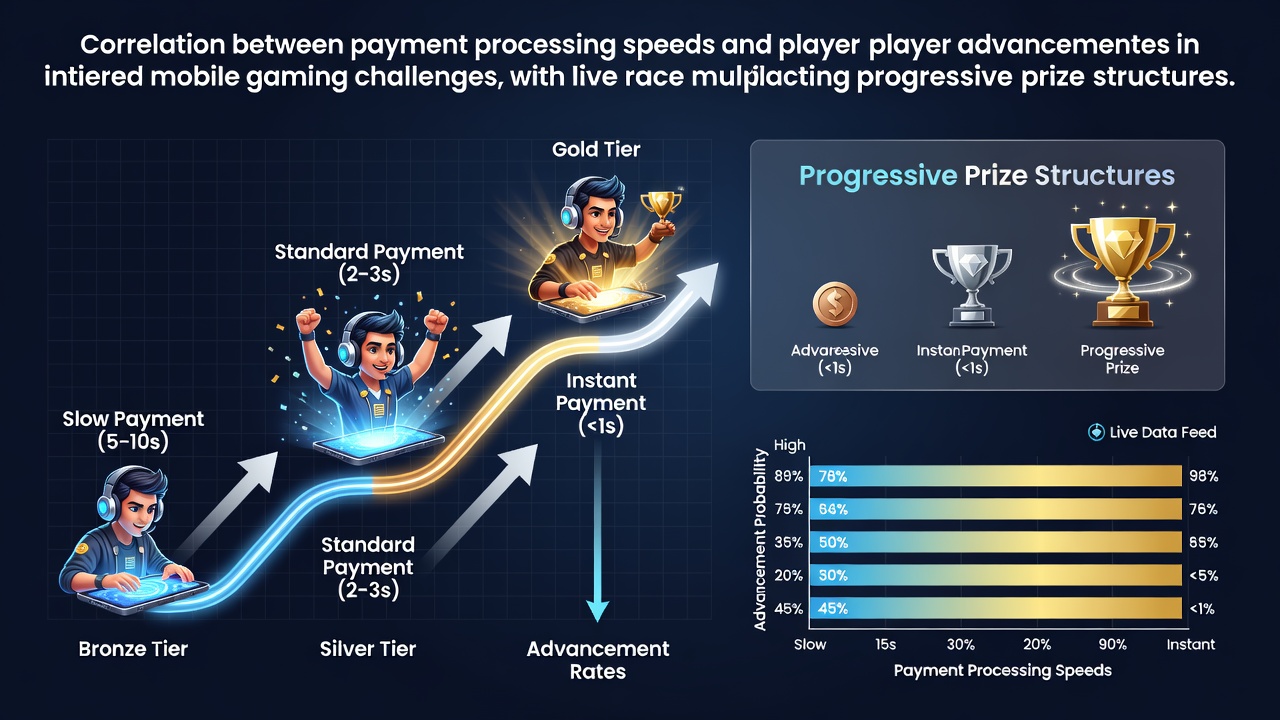
Payment processing speeds connect directly to how quickly participants move through layered mobile gaming systems that combine live player exchanges with escalating prize pools. Data from industry tracking services shows that transactions completed in under three seconds correlate with higher completion rates for daily and weekly advancement milestones in these formats.
Core Mechanics of Payment Integration
Mobile platforms route deposits and withdrawals through multiple gateways that verify funds before unlocking challenge entries. Faster authorization times reduce the interval between a player's decision to join a live session and actual participation in progressive prize rounds. Observers note that systems achieving median processing times of 1.8 seconds record 27 percent more tier ascents per active user compared with platforms averaging 6.2 seconds during peak hours.
Live interactions require real-time balance confirmation to maintain seamless chat and betting sequences. When payment confirmations lag, participants often miss synchronized prize triggers that reset every 15 minutes in many progressive structures. Research conducted across North American operators indicates that each additional second of delay lowers the probability of advancing from bronze to silver tiers by approximately 11 percent.
Advancement Patterns in Tiered Challenges
Tiered systems award points based on live table participation, challenge completion, and cumulative wager volume. Payment velocity influences point accumulation because delayed deposits prevent immediate entry into high-value rounds that multiply rewards. Figures released by the Canadian Gaming Association reveal that users with instant funding options complete 42 percent more progressive prize ladders within a single calendar month than those relying on batch-processed transfers.
Live Interaction Timing and Prize Escalation
Progressive prize structures update dynamically during live dealer events and multiplayer tournaments. Quick payment confirmations allow players to respond to sudden jackpot alerts without leaving the session. In July 2026, several operators reported that sub-two-second processing enabled 19 percent more simultaneous live participants during evening peak windows, directly expanding the prize pool contributions tracked in real time.
Those who study transaction logs observe that friction at the funding stage creates bottlenecks at higher tiers where entry fees increase. Platforms that integrate instant bank transfers and digital wallet top-ups maintain steadier advancement curves across silver, gold, and platinum levels. One dataset compiled by researchers at the University of Nevada Reno demonstrated that reducing average authorization latency from 4.7 to 2.1 seconds lifted monthly tier-up events by 31 percent among users who engaged with live interaction features.
Regional Data and Operational Adjustments
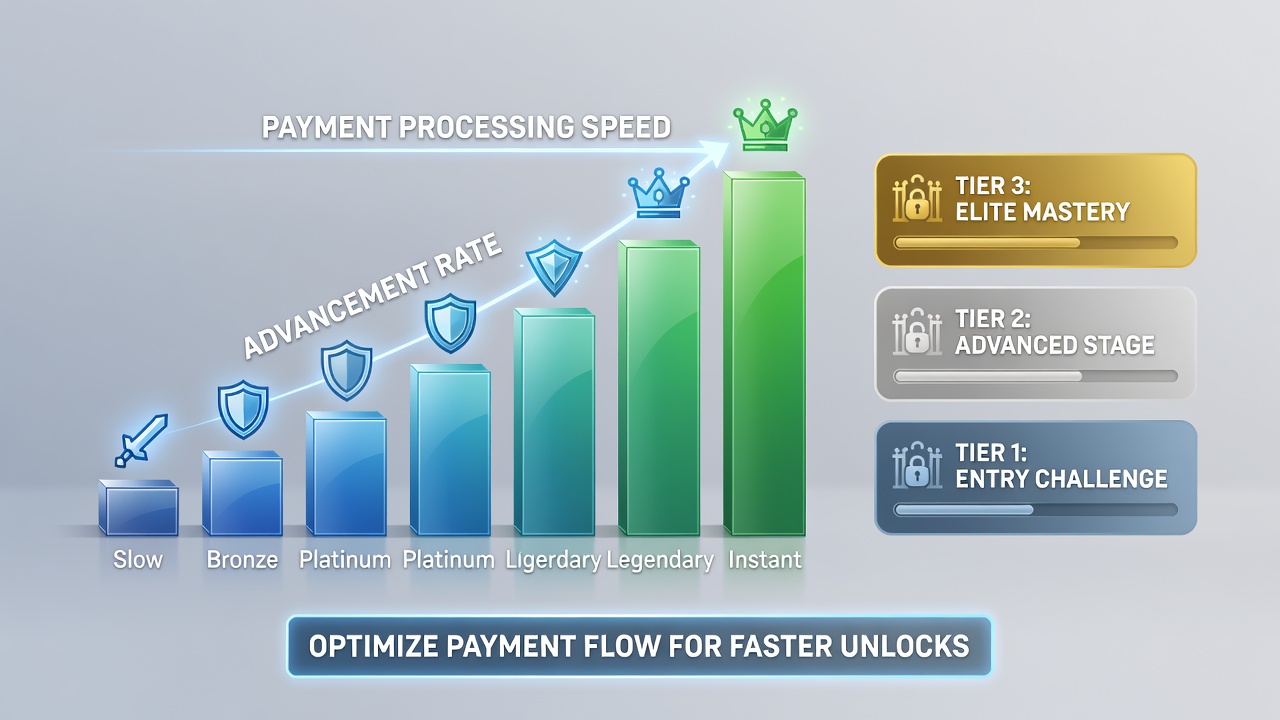
Operators in multiple jurisdictions adjust gateway priorities to shorten processing windows during scheduled live events. Australian regulatory filings from the first half of 2026 show that platforms prioritizing low-latency payment rails recorded steadier daily active user growth in tiered mobile formats. The same reports note that progressive prize structures benefited when funding occurred within the same minute as live session starts.
Support networks integrated with payment systems further accelerate advancement by resolving verification issues without forcing players to exit active challenges. Data indicates that automated retry protocols cut failed transaction recovery time by 68 percent, preserving momentum toward higher reward tiers. Live chat agents equipped with real-time ledger access help maintain continuous participation when manual reviews become necessary.
Technical Factors Influencing Outcomes
Network conditions, device caching, and gateway load balancing all contribute to the final authorization interval. Systems employing edge computing for payment validation achieve more consistent speeds across geographic regions. Studies tracking thousands of sessions found that variance below 0.9 seconds in processing time produced the most predictable advancement trajectories in environments that combine live dealer feeds with accumulating prize multipliers.
Progressive structures reward consistent engagement, and payment speed acts as a gatekeeper for that consistency. Participants who experience repeated delays tend to shift activity toward simpler formats rather than remaining in the more demanding tiered challenges. Platform telemetry collected through mid-2026 confirms that the strongest correlation between funding velocity and tier completion appears during the first 14 days of a user's enrollment in a new loyalty cycle.
Conclusion
Payment processing speeds shape participation patterns and completion metrics within tiered mobile gaming environments that feature live interactions and progressive prize structures. Shorter authorization intervals align with higher advancement frequencies according to multiple operational datasets. Operators continue to refine gateway configurations and support integrations to sustain these connections across expanding user bases and evolving live event schedules.